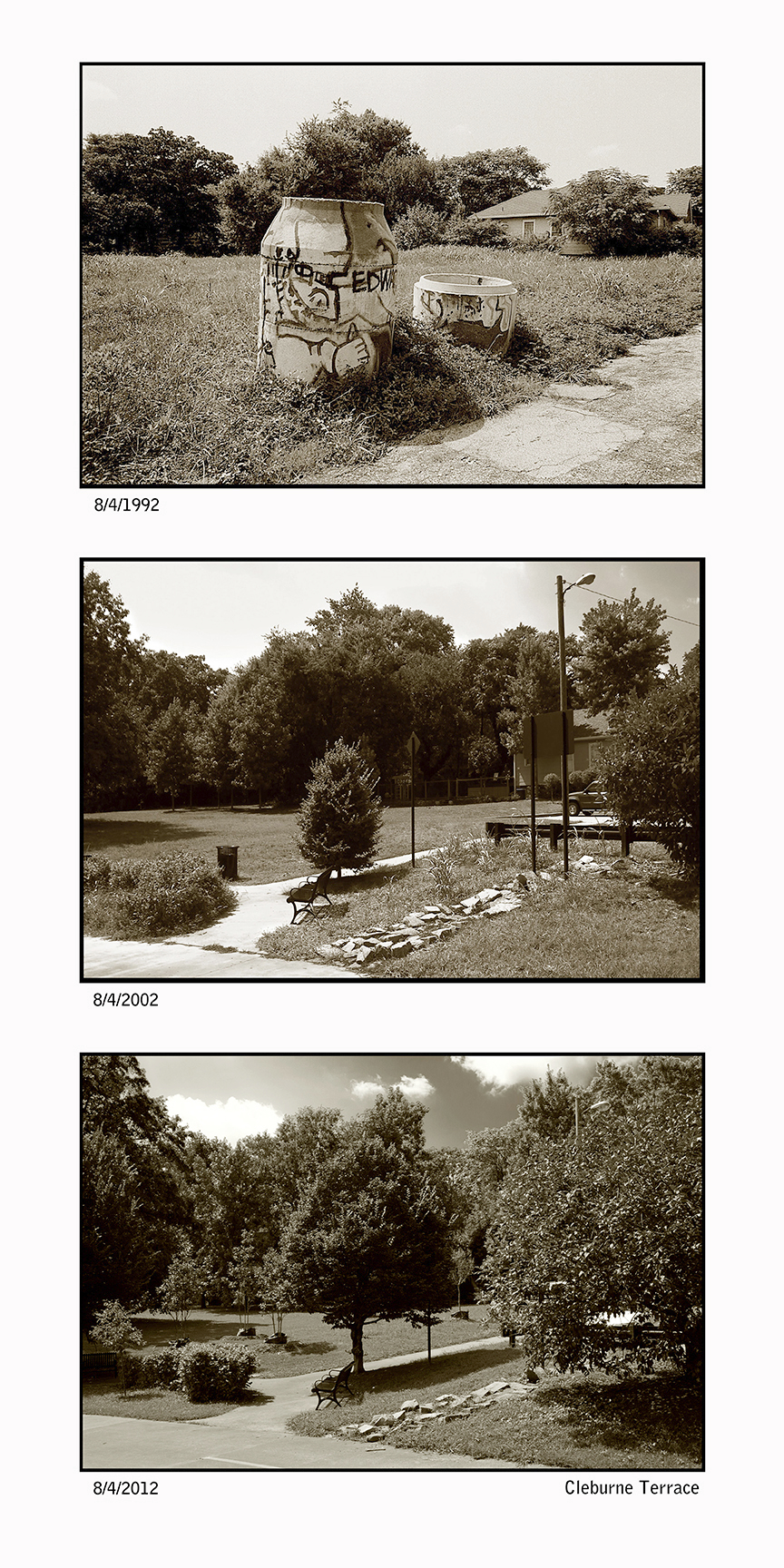
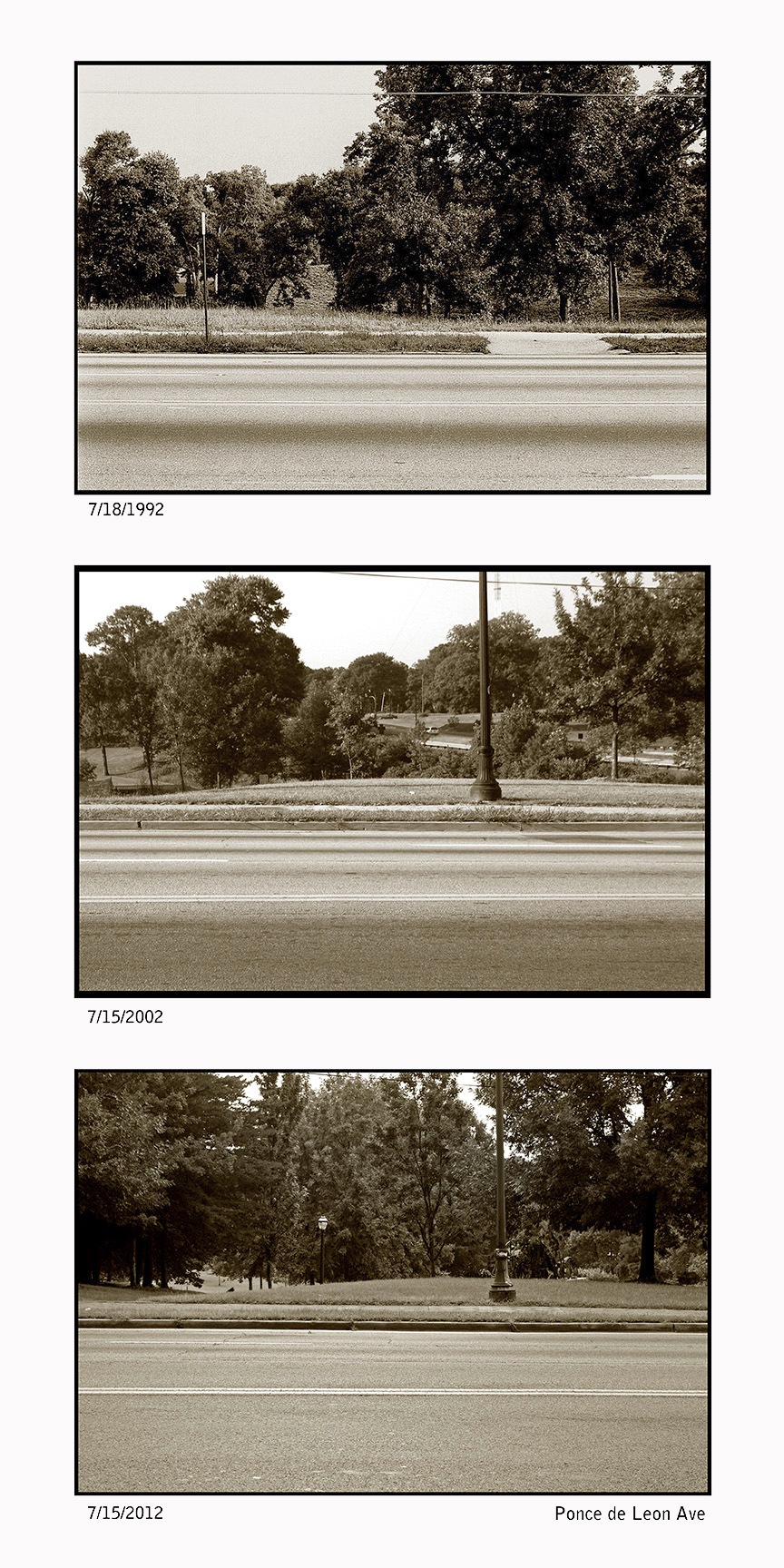
Decades is the second part of a photographic series commissioned by Don Bender. The original project, Decade, featured photographs taken in 1992 and 2002, documenting locations before and during the development of Freedom Park. Decades continued the project with photographs taken in 2012, allowing visitors to see the same locations ten years apart.
I selected the locations based on their visual character and personal interest. Over the years, I photographed the entire park during construction and continued documenting its development, including events such as Art in Freedom Park and Naked Freedom.
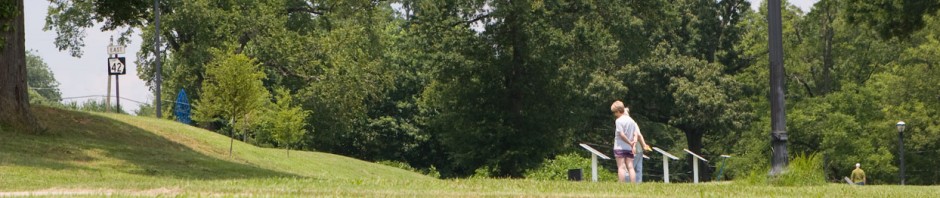
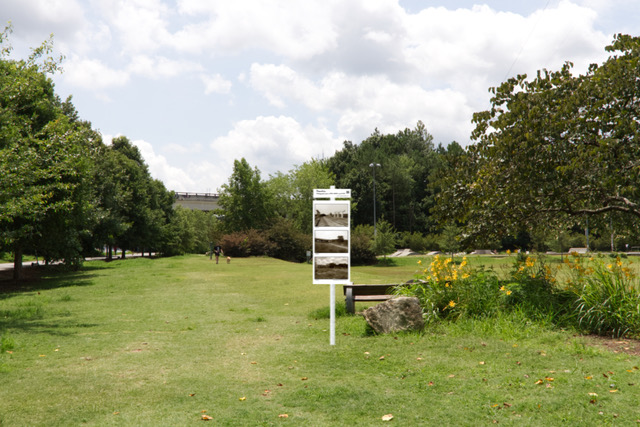
The photographs were installed throughout Freedom Park at the exact locations where they were originally taken. Beginning October 1, 2022, the exhibition was presented in conjunction with Atlanta Celebrates Photography and remained on display through February 2024.
The idea behind displaying the photographs at their original locations was to give visitors an opportunity to experience the changes firsthand. Rather than viewing the images in a gallery, visitors could stand where each photograph was taken, compare the landscape across three decades, and appreciate what the land has become.
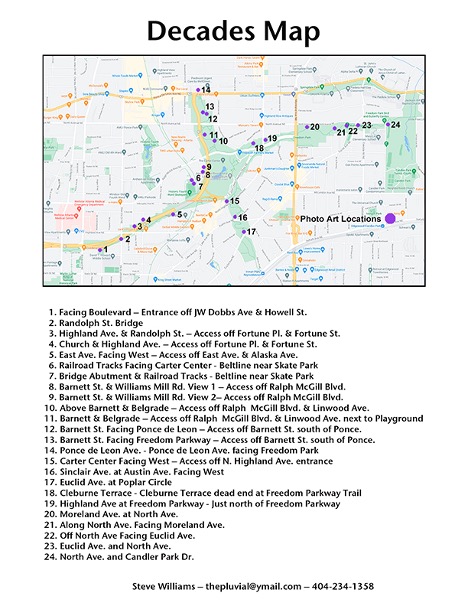
Use the park map and photo guide to locate the installations. If you have difficulty finding a location, scroll down to the corresponding photograph and read its caption. Some locations also include additional stories about the sites.
Freedom Park is more than a park. It represents nearly 60 years of community activism, neighborhood preservation, and a successful effort to stop a major highway from dividing Atlanta’s historic intown neighborhoods.
In the 1970s, the Georgia Department of Transportation proposed a four-lane expressway, known as the Jimmy Carter Presidential Parkway, through the 219 acres we now know as Freedom Park. The plan included five bridges over neighborhood streets and would have divided communities and destroyed portions of three city parks.
Residents from nine intown neighborhoods joined forces to fight the proposal. What followed was a nearly 20-year struggle involving years of legal challenges, including cases that reached the Georgia Supreme Court. Community residents were joined in their efforts by public officials, including then-City Councilman John Lewis and Mayor Maynard Jackson.
The neighborhoods ultimately stopped the expressway as originally proposed and reached a compromise for a limited-access road. The result was the landscape that became Freedom Park, preserving connections between neighborhoods and creating one of Atlanta’s most distinctive public spaces.
I hope this series encourages you to explore Freedom Park, learn about its history, and appreciate the benefits it brings to the surrounding communities. Most importantly, I hope the photographs help keep alive the story of the residents who fought to preserve this land and create the park we enjoy today.
Photographs at locations 2, 8, 10, and 24 are still installed. Unfortunately, others were removed or damaged by lawn maintenance equipment.
Thanks to Colorchrome for the prints
Thanks to Oscar of Gonzalez Construction for art installation. Specializing in Decks, Waterfalls, chimneys, driveways, patios landscaping and more… 404-707-8713
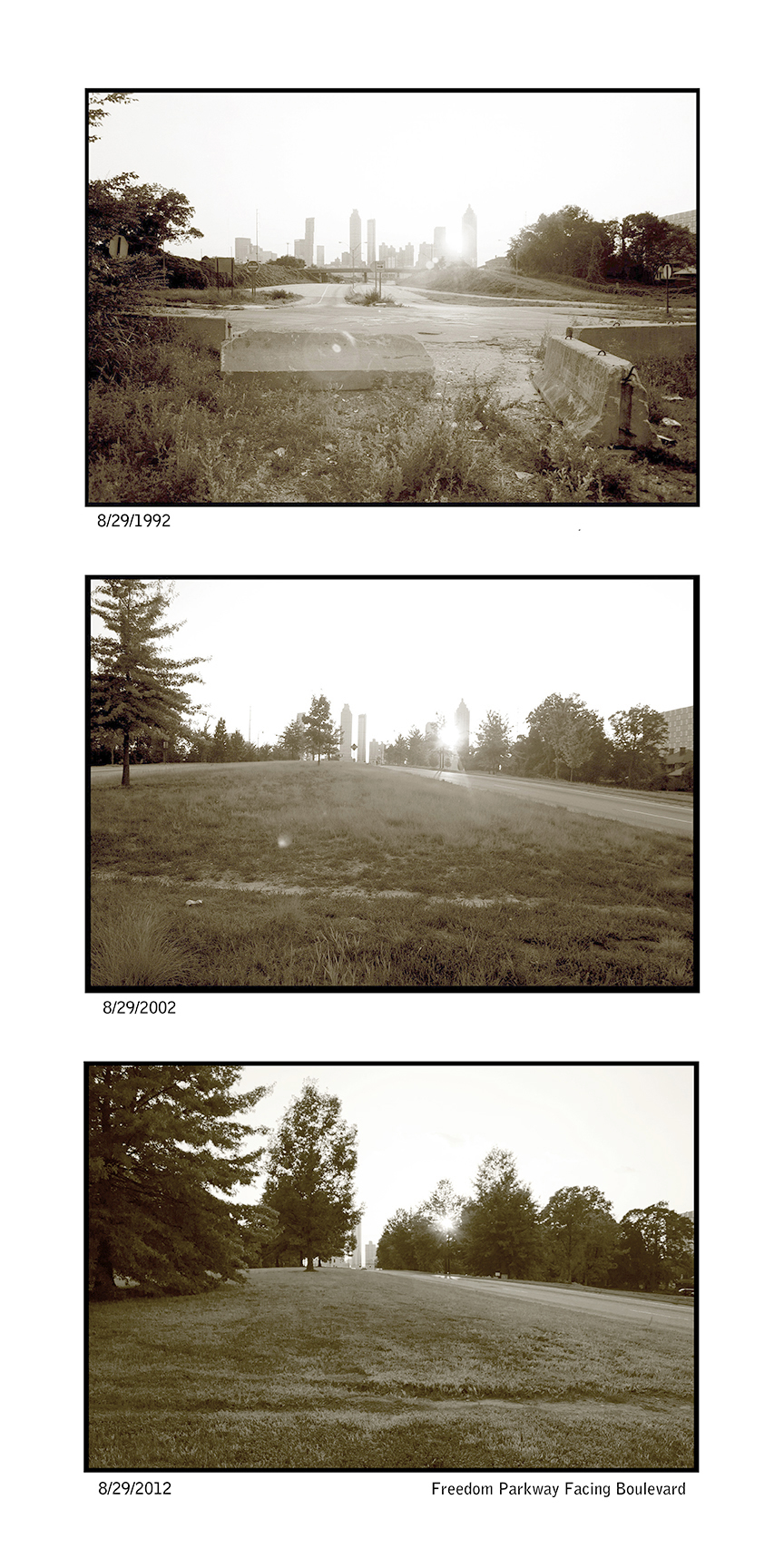
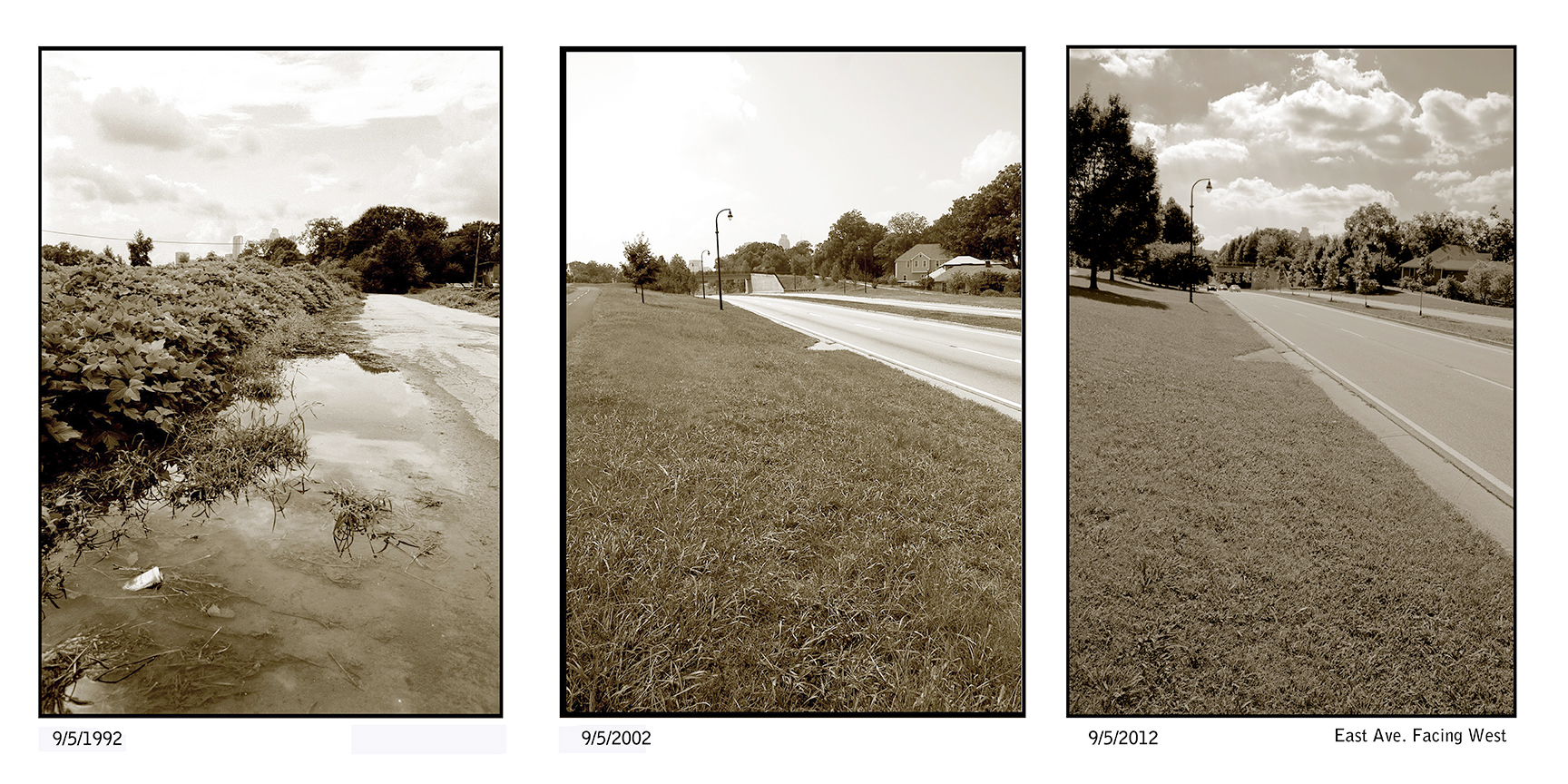
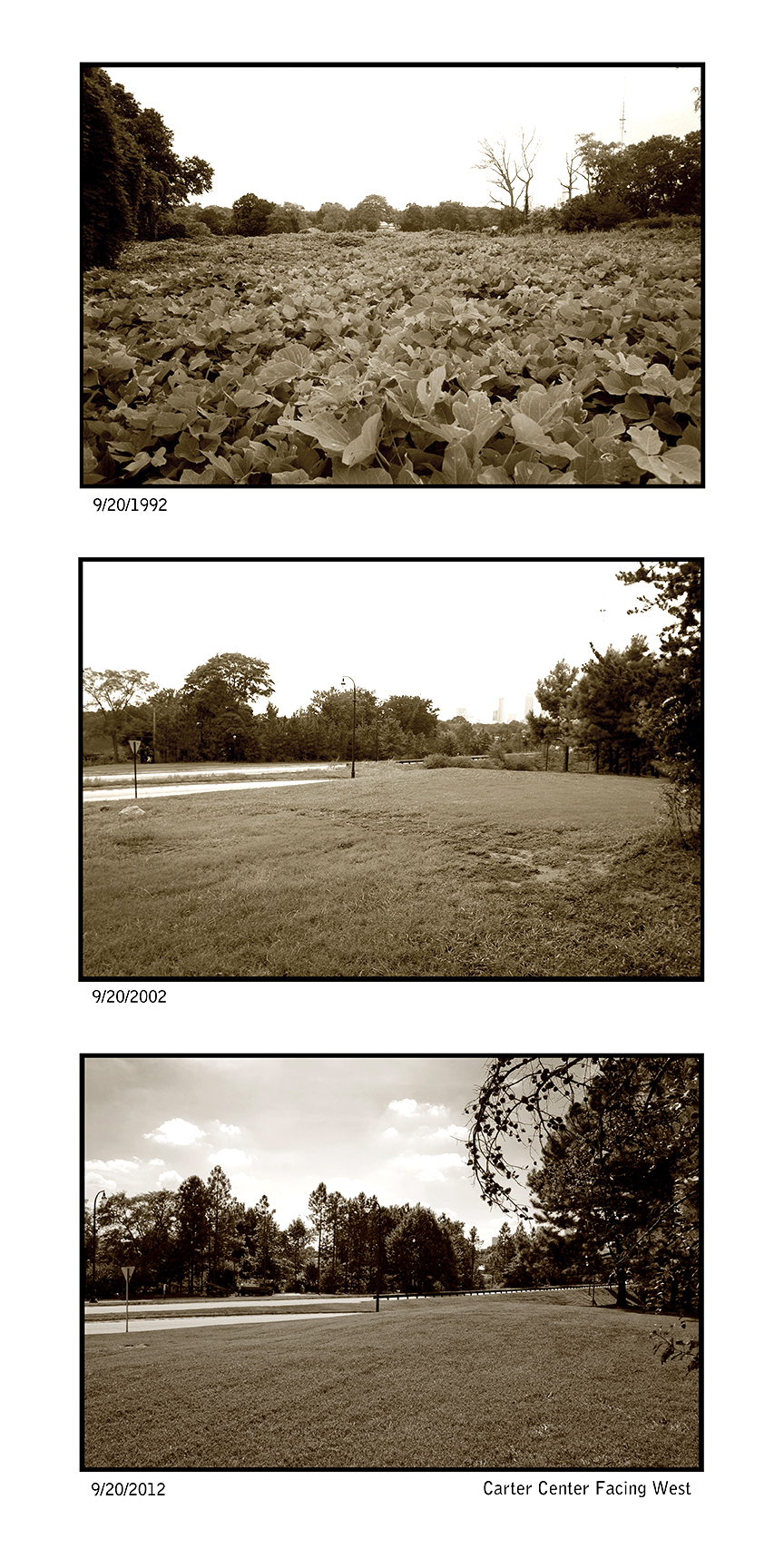
This the entrance to Freedom Park from the west where the road originally ended on Howell St. as the trail in the other two photos show. The photo was taken in between the two lanes, however I placed the triptych where the observer would be safe. The Boulevard bridge is buried now.
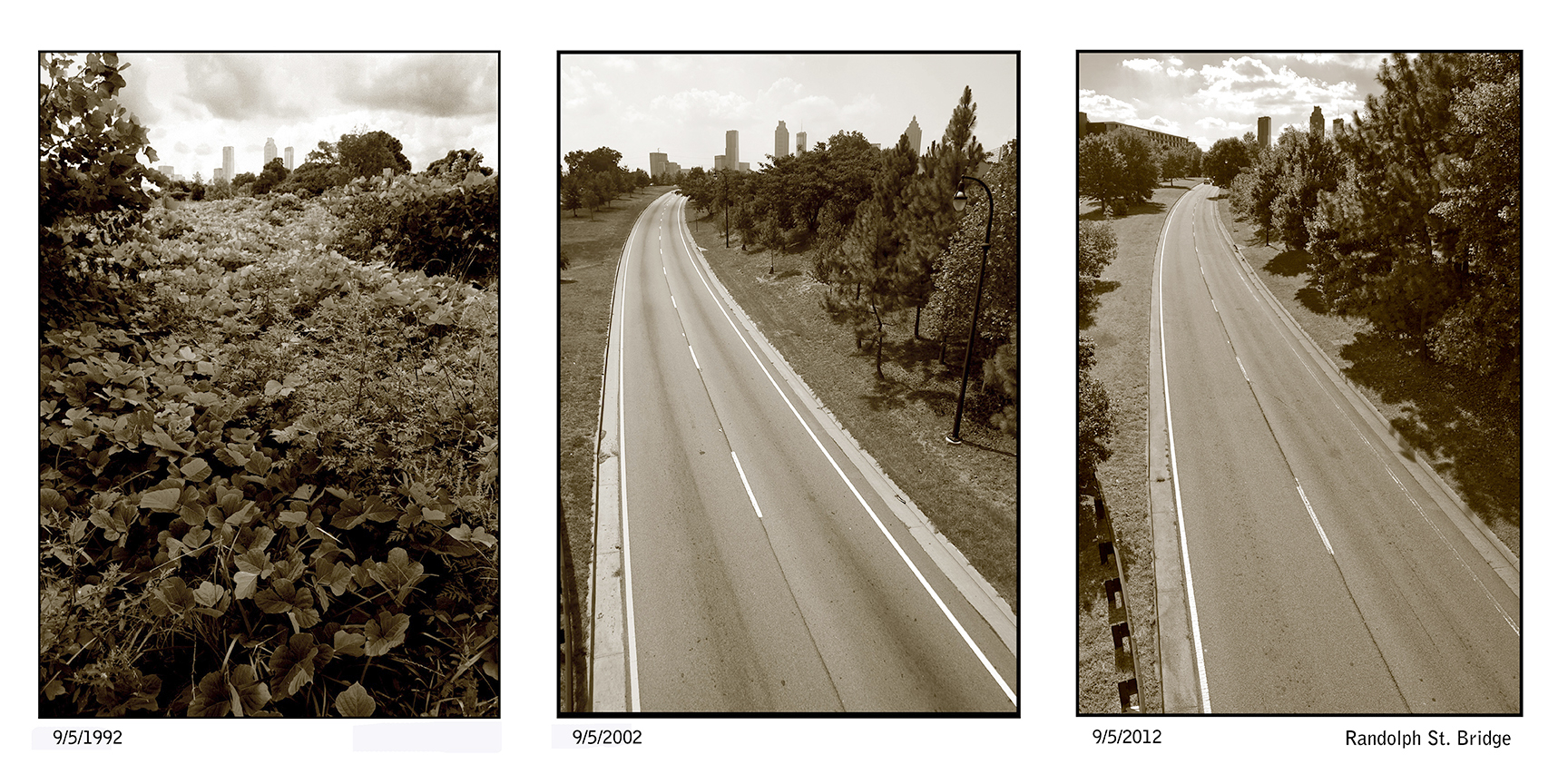
The place to view this triptych site is by the orange spot on the rail. Notice the closeness of the kudzu.
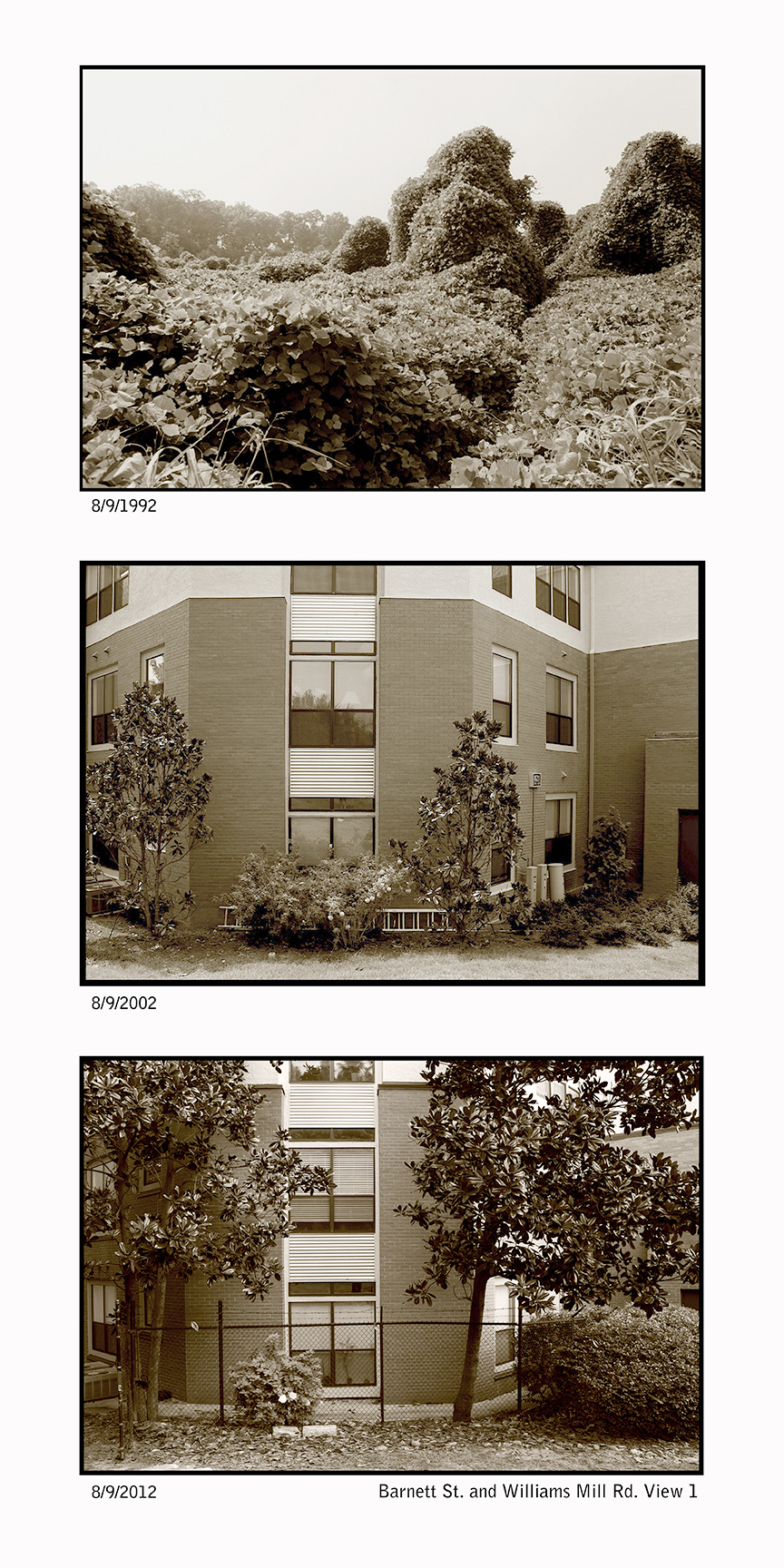
The first photo shows a trail probably made by one of the several homeless vets that occupied the current park as the land waited to be developed.
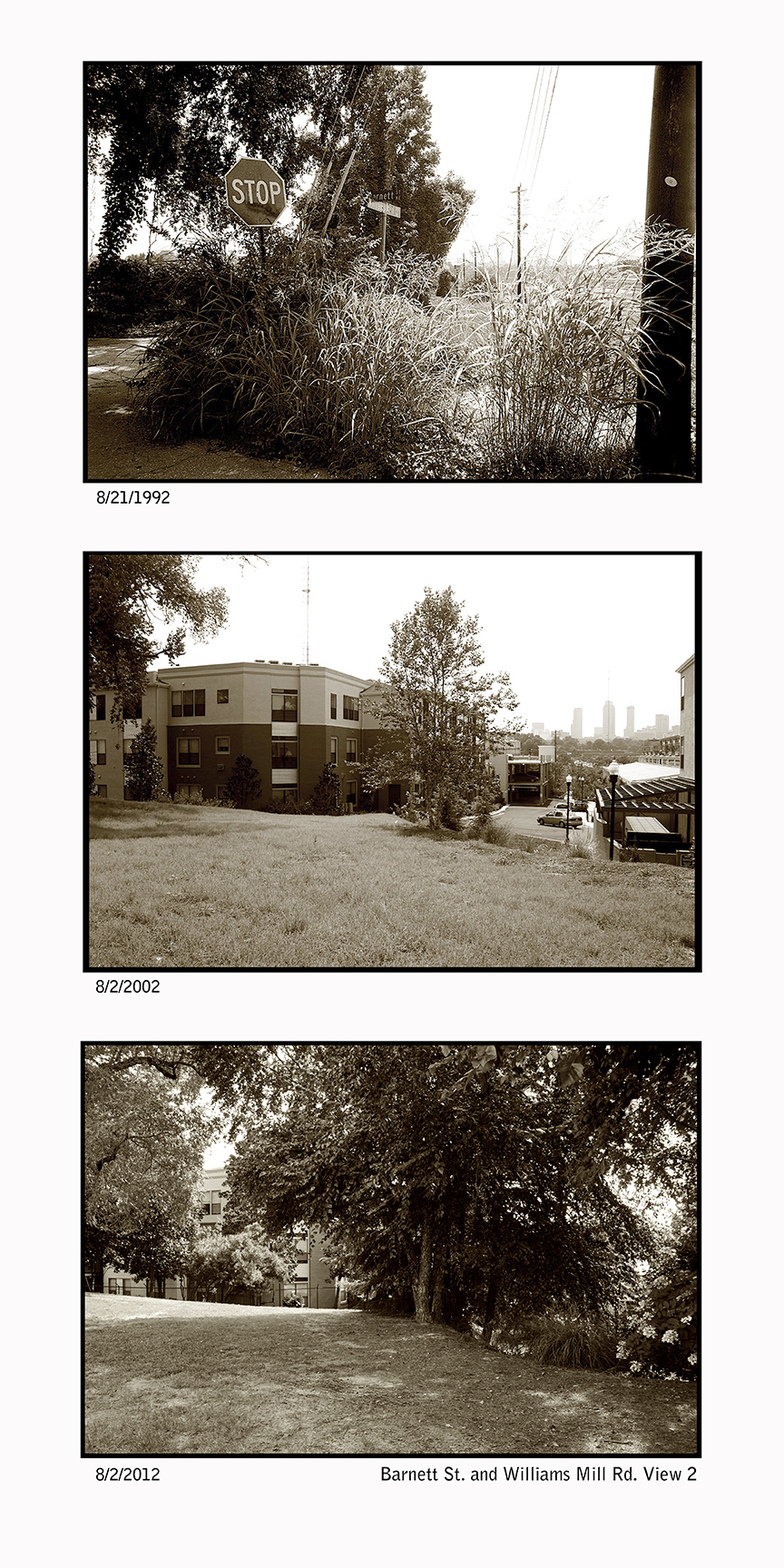
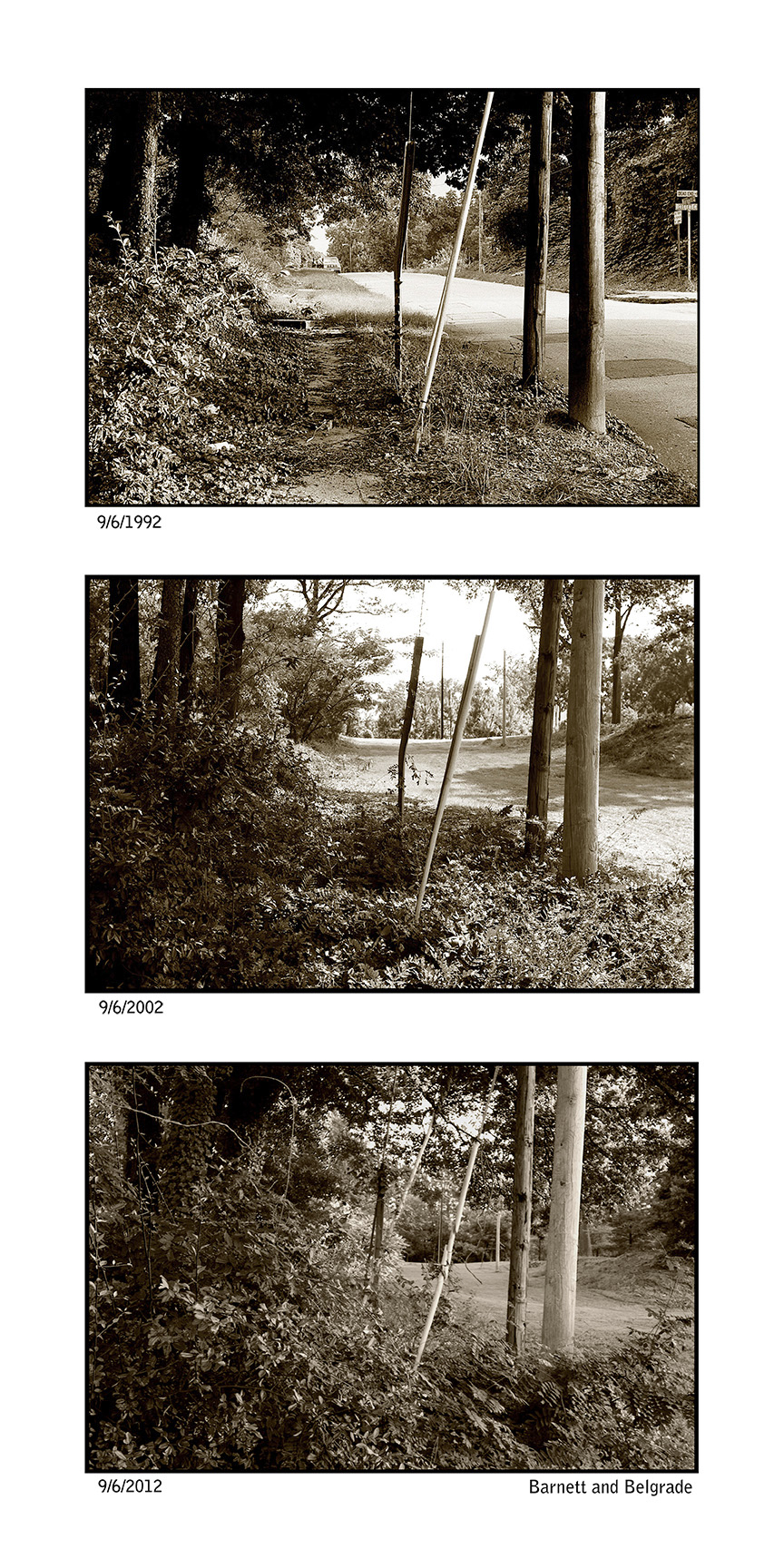
The remnants of the Barnett St. and Belgrade Ave are still intact. However, the houses are gone.
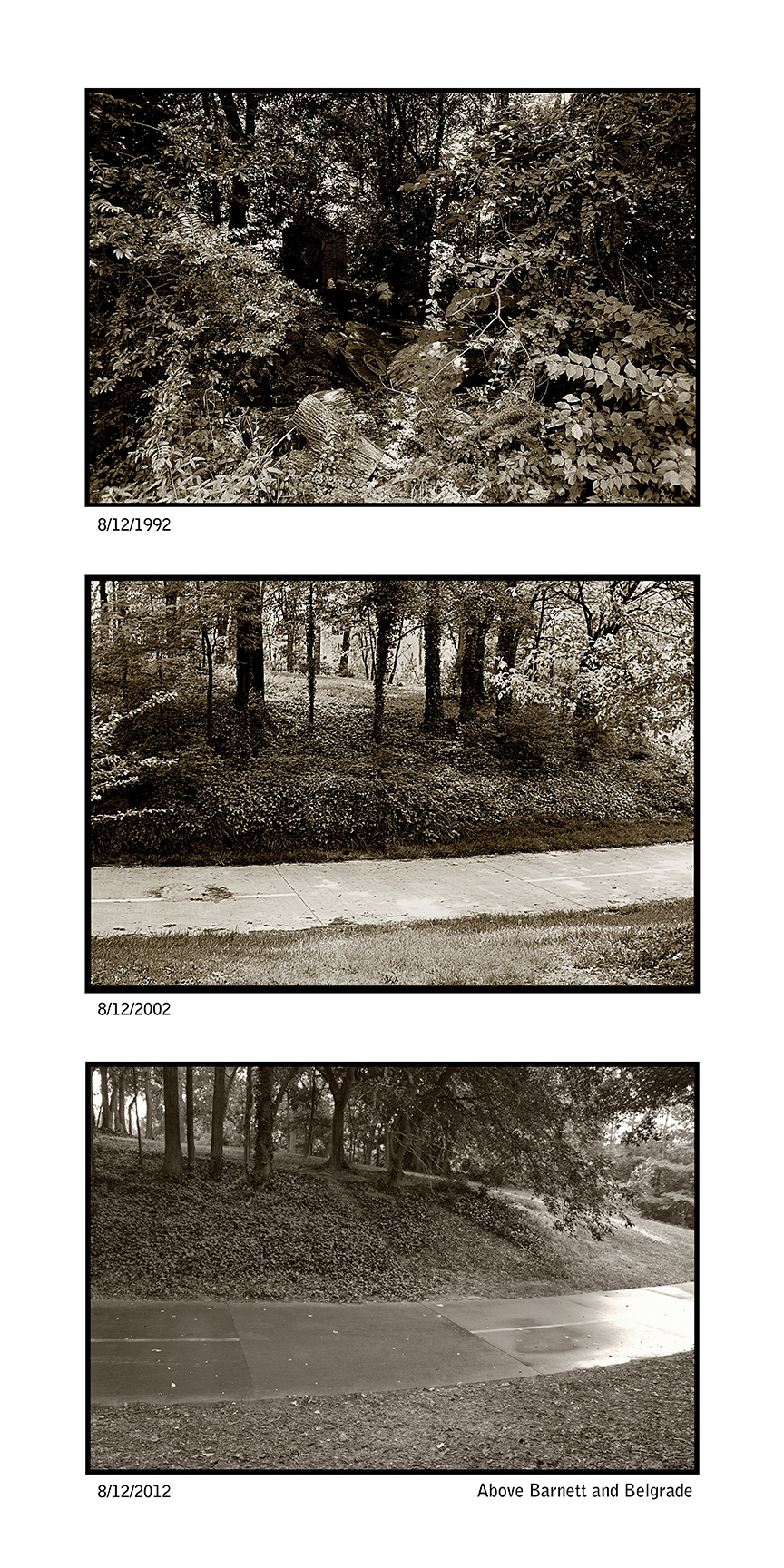
This site was where another homeless vet once lived.
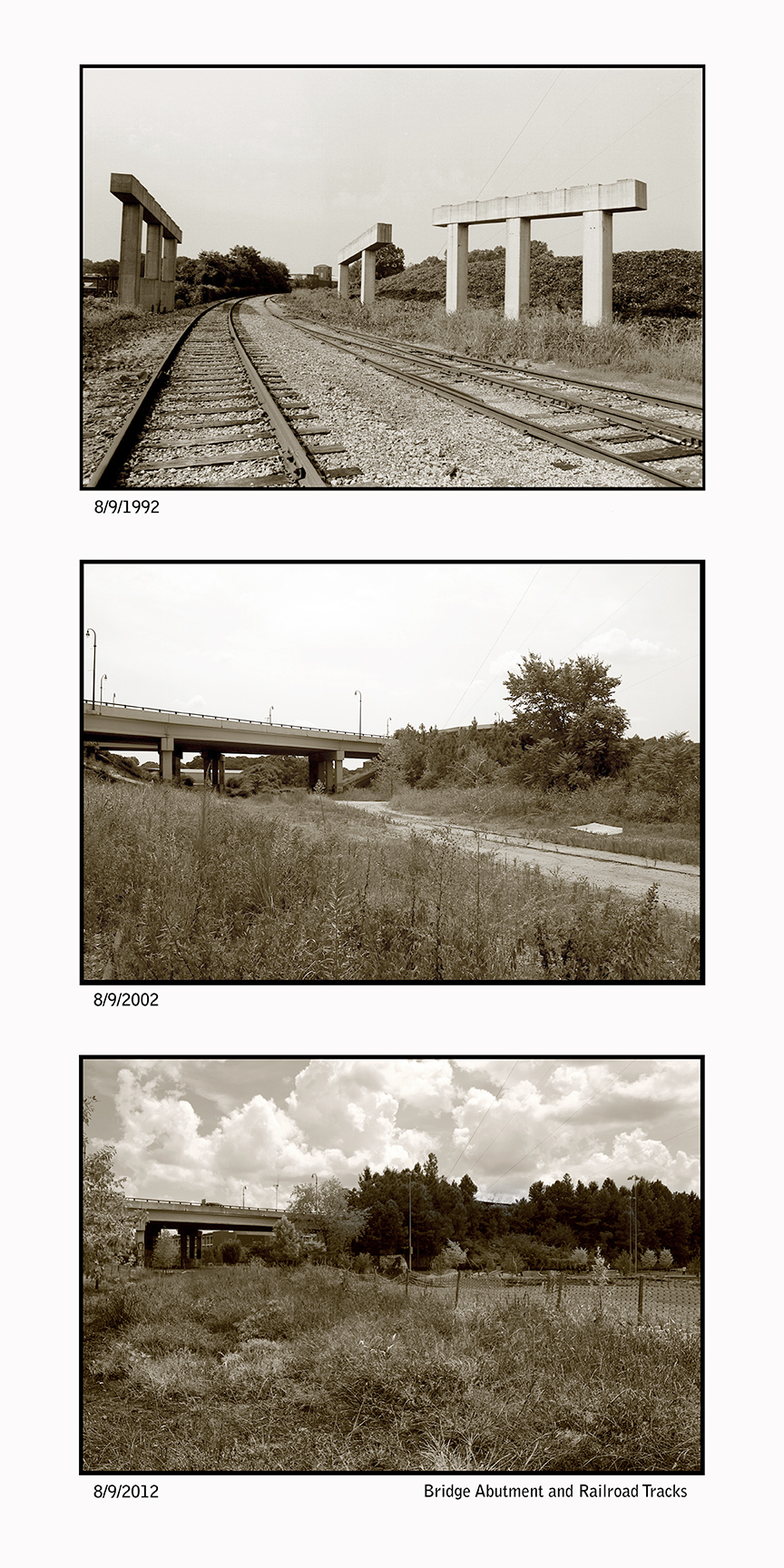
The first photo shows the bridge abutments placed by the GA DOT for the Presidential Parkway that was later scrapped.
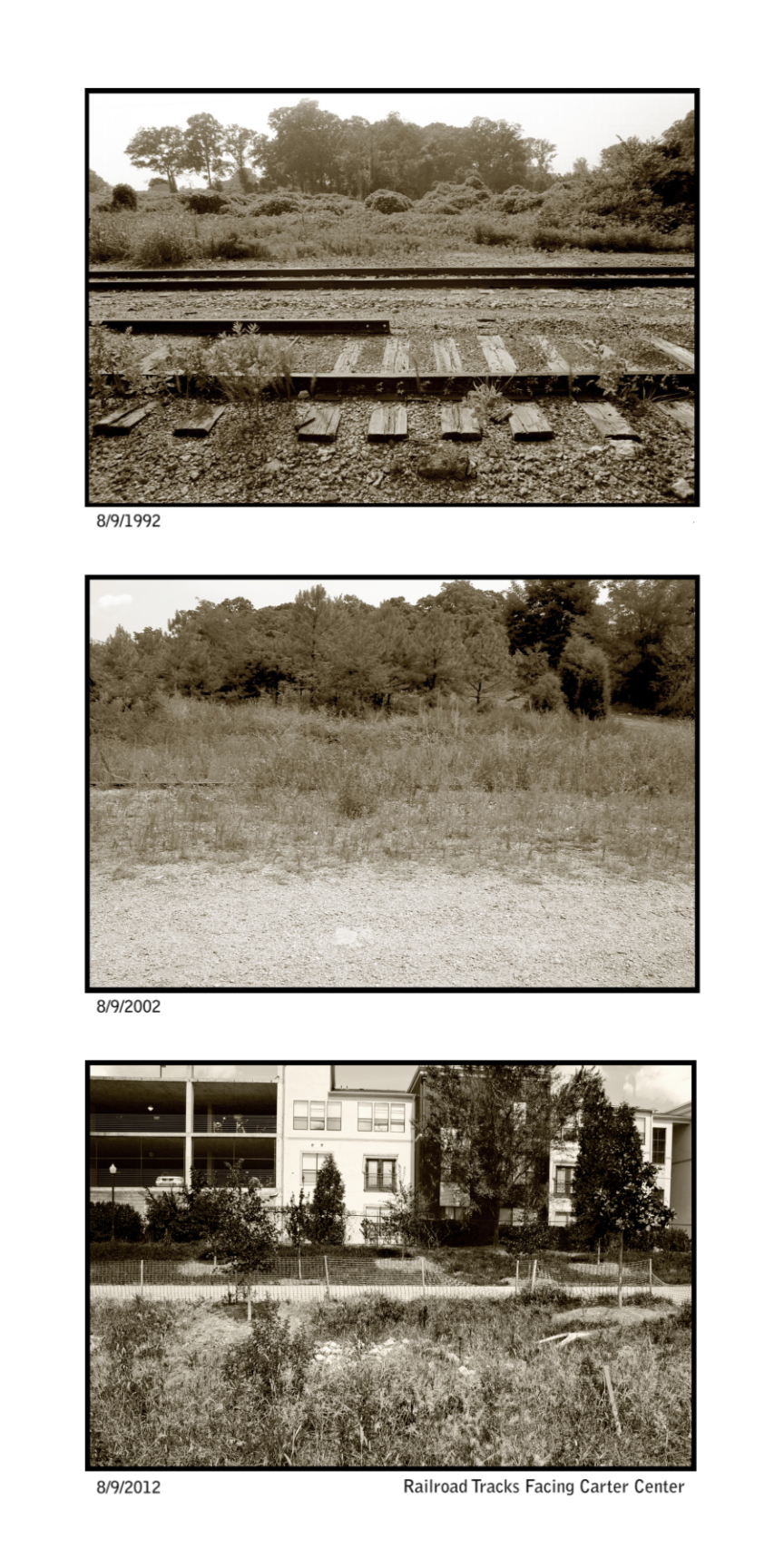
The trees in the background of the first photo show where the Carter Center was to be built.
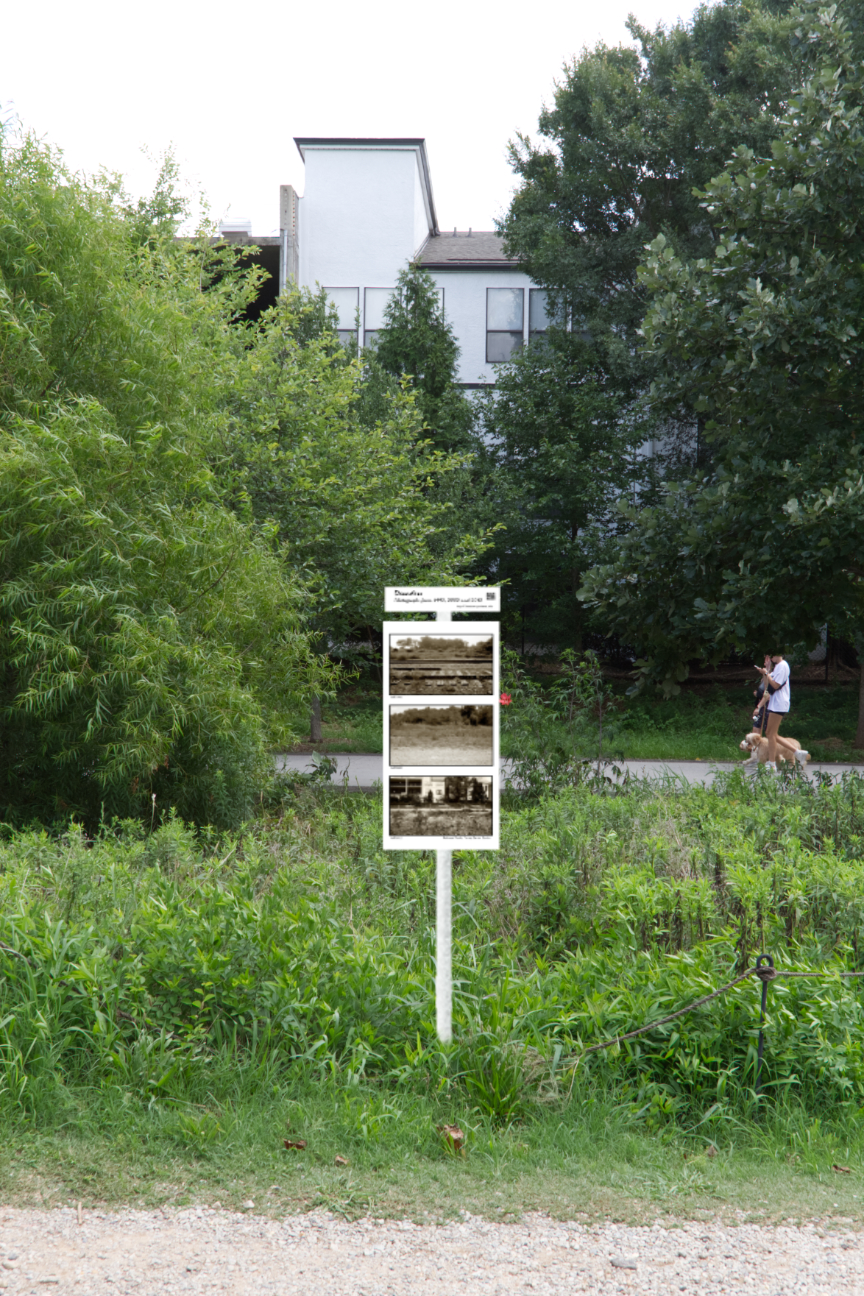
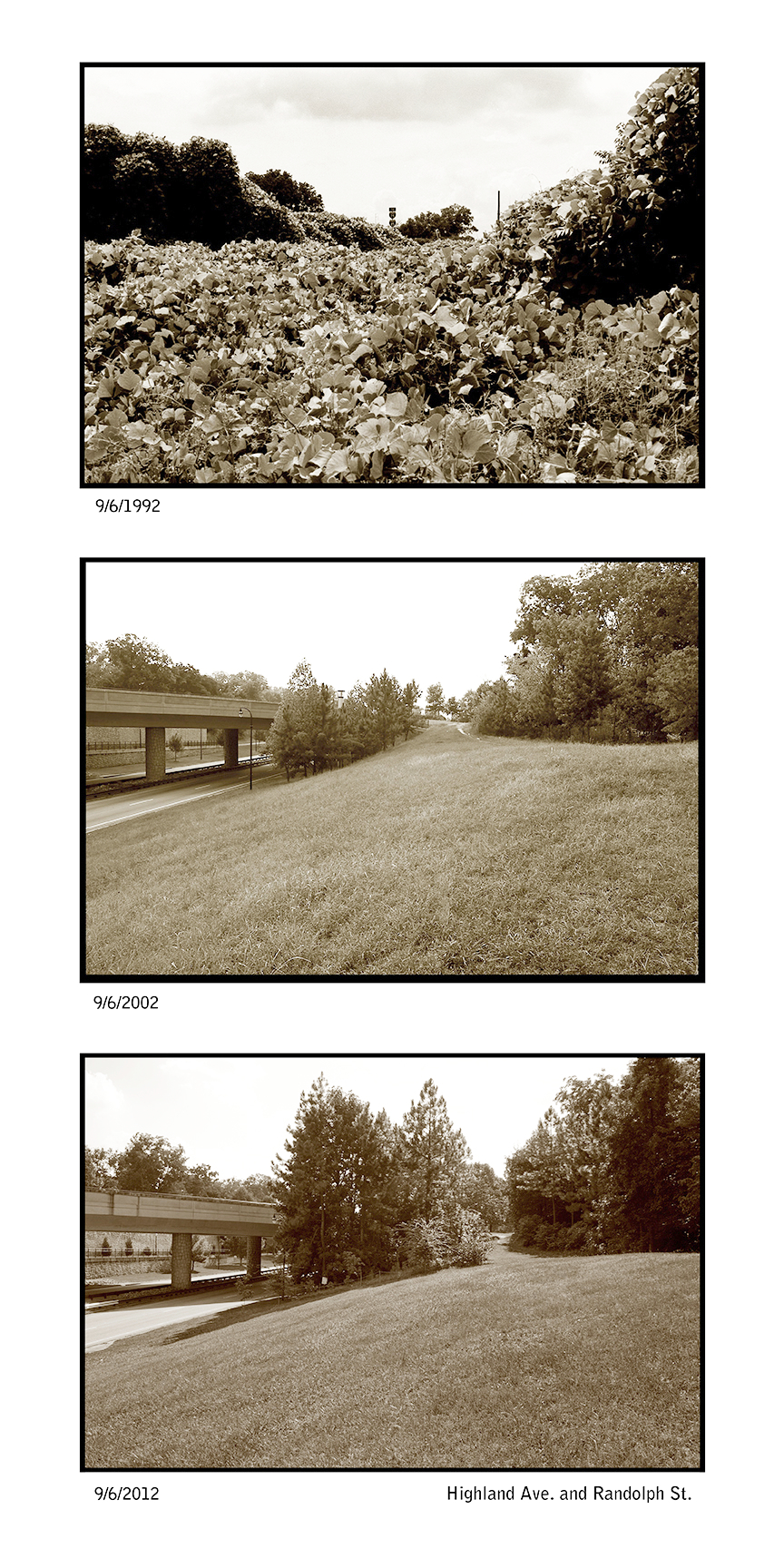
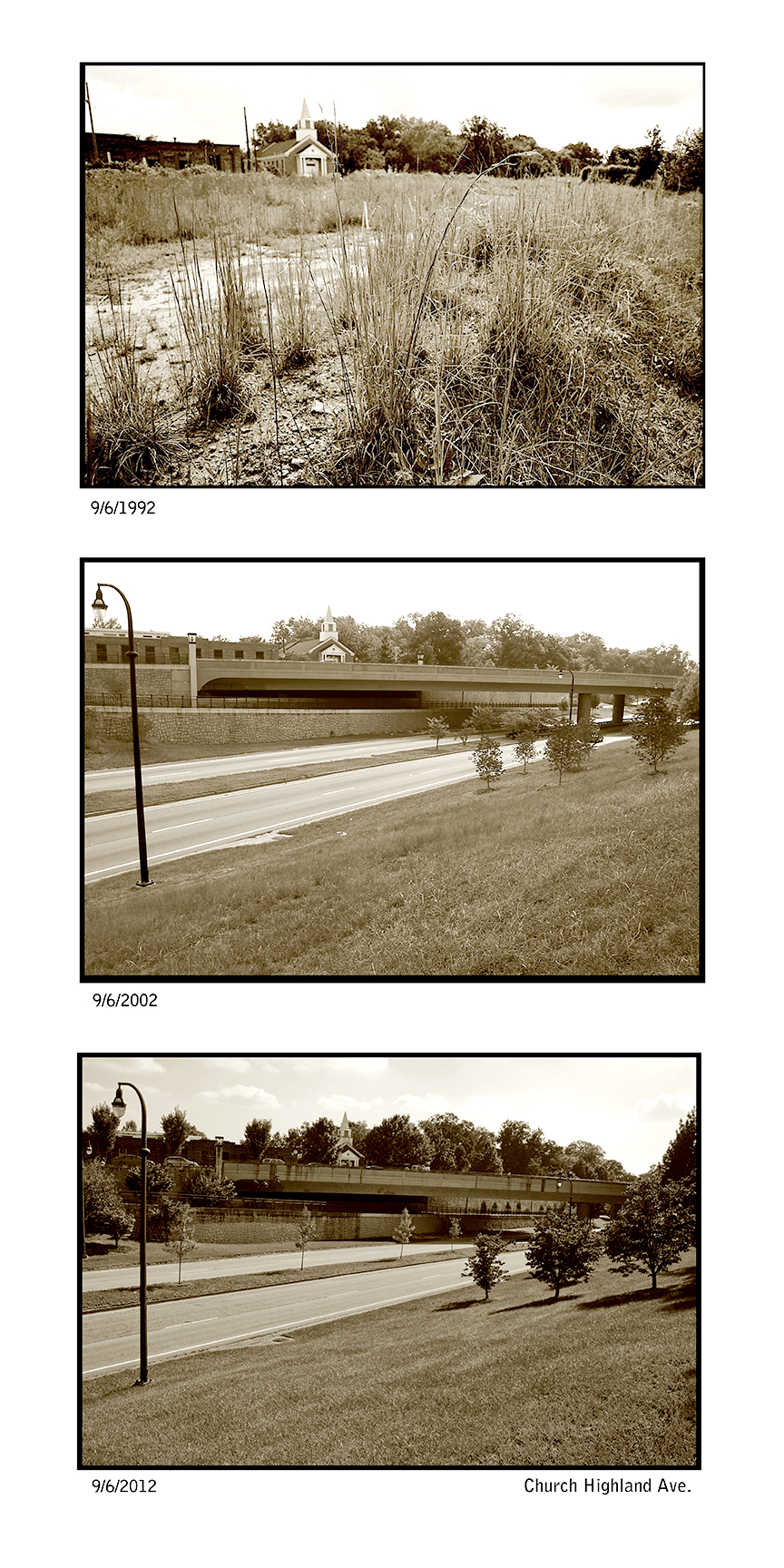
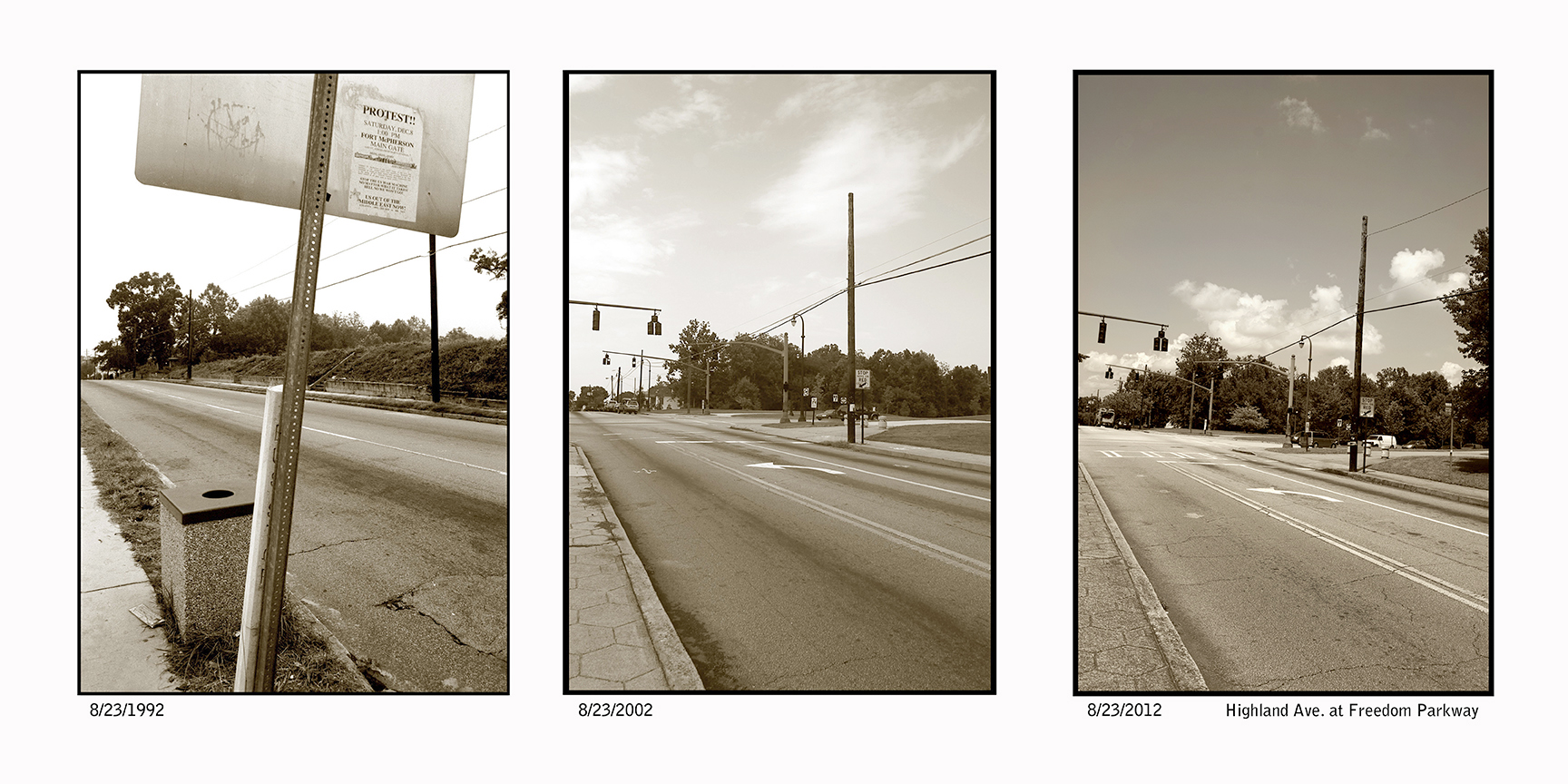
This site is just north of the intersection of Freedom Parkway and Highland Eve. The triptych is on the other side of the sidewalk, but the view is from the tree with the broken branch near the curb.
Notice the steps across the street where hundreds of people were displaced in the 1970’s by “The Road”. If you continue south on N. Highland there are more steps on the right as honored by Karen Tauches in her performance piece Disappeared Houses during the Art in Freedom Park in 2005.
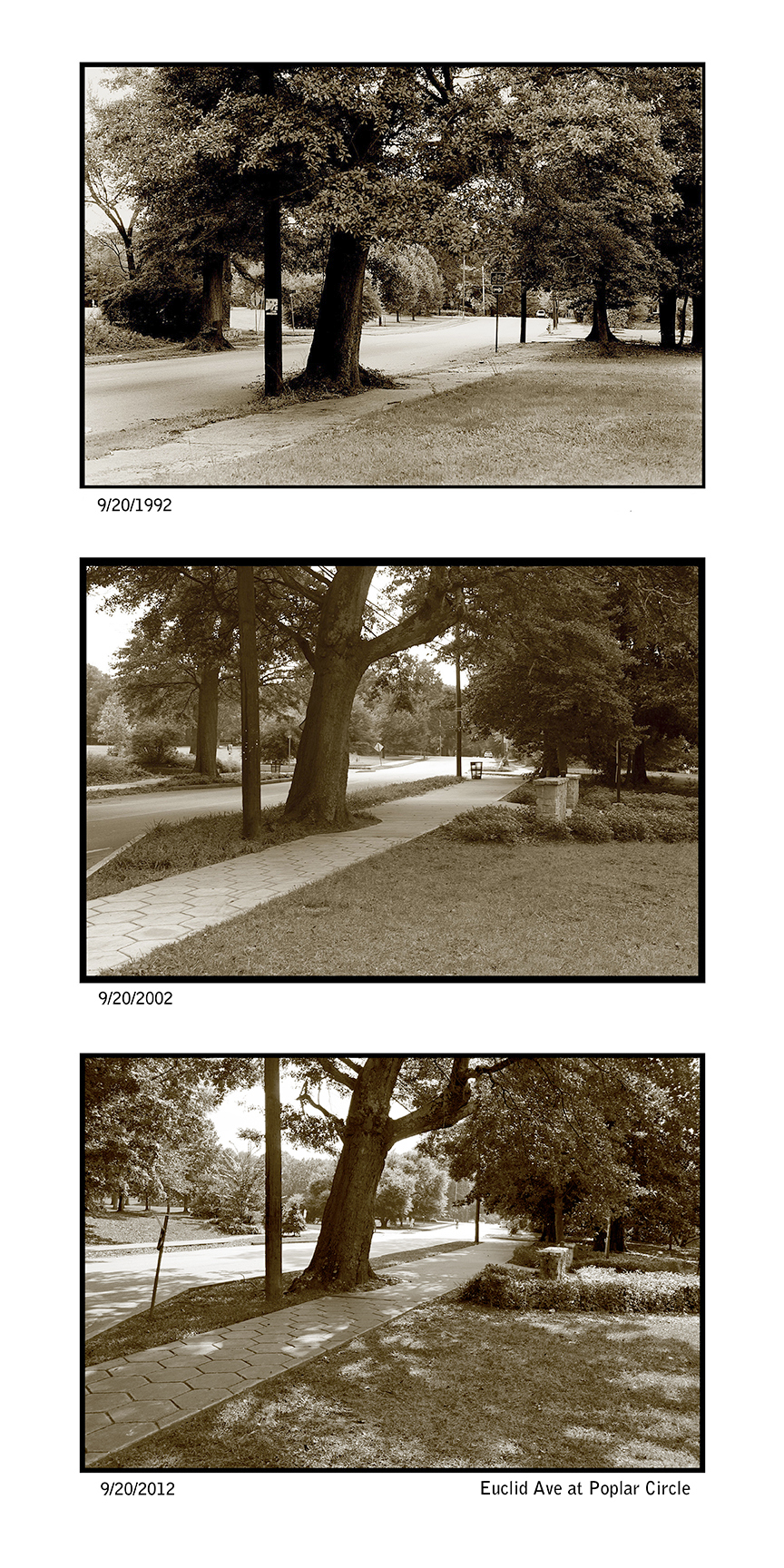
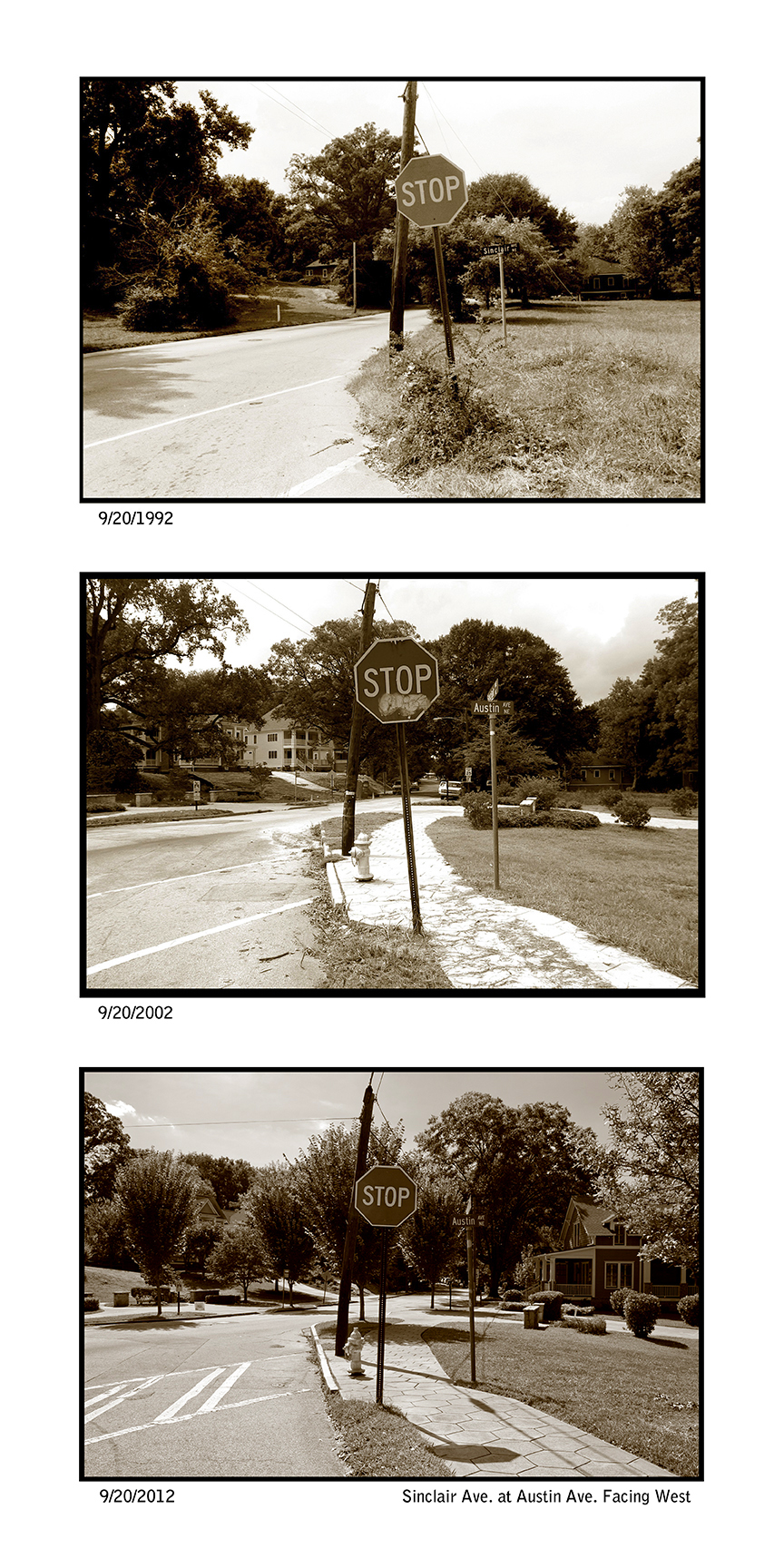
If you get there mid afternoon you may see the bike rider relaxing in a hammock across the parkway in the woods. The tree to the right in the last photo shows where. I often see unique occurrences in Freedom Park.
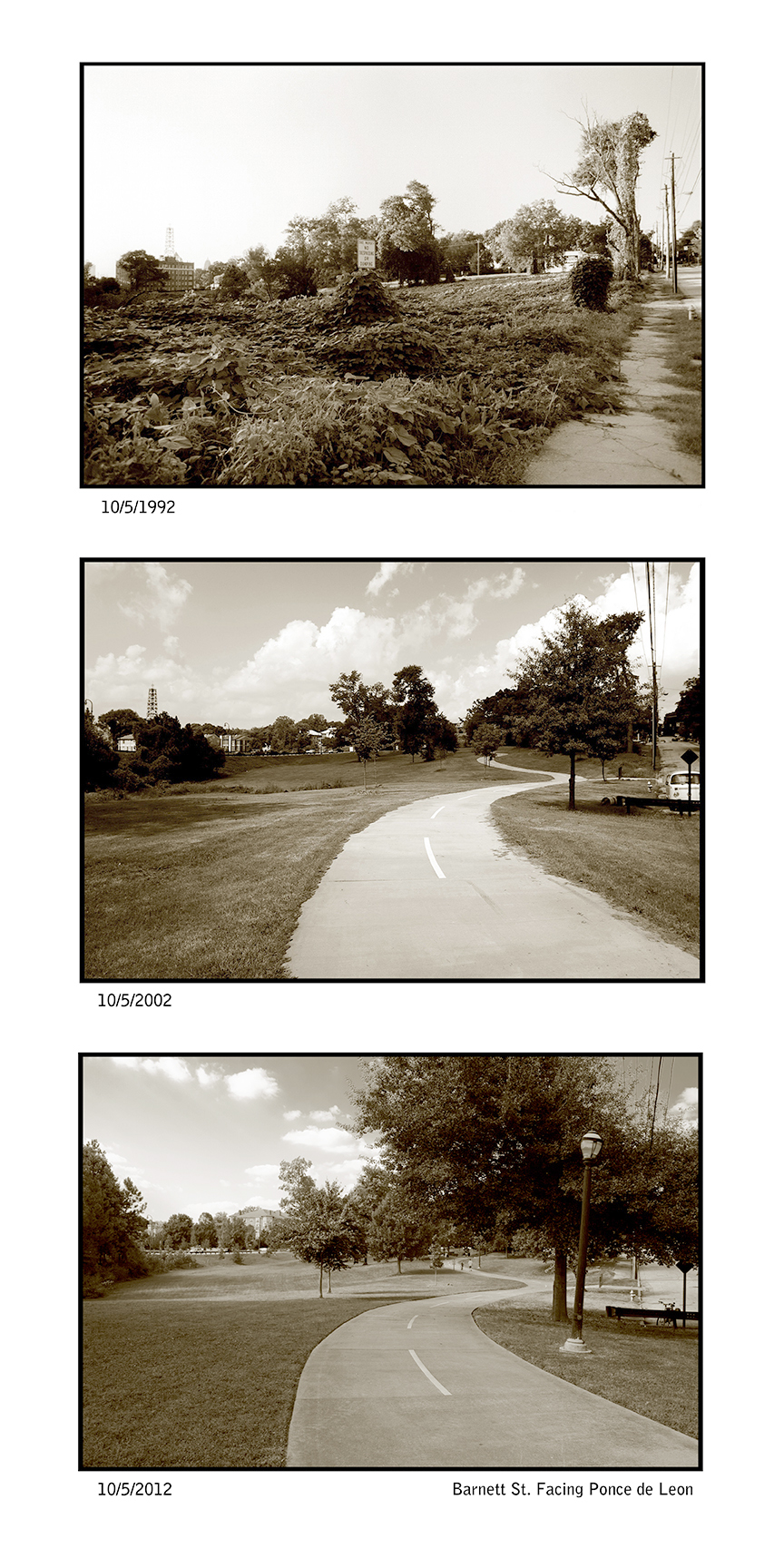
Notice my van in the second photo.
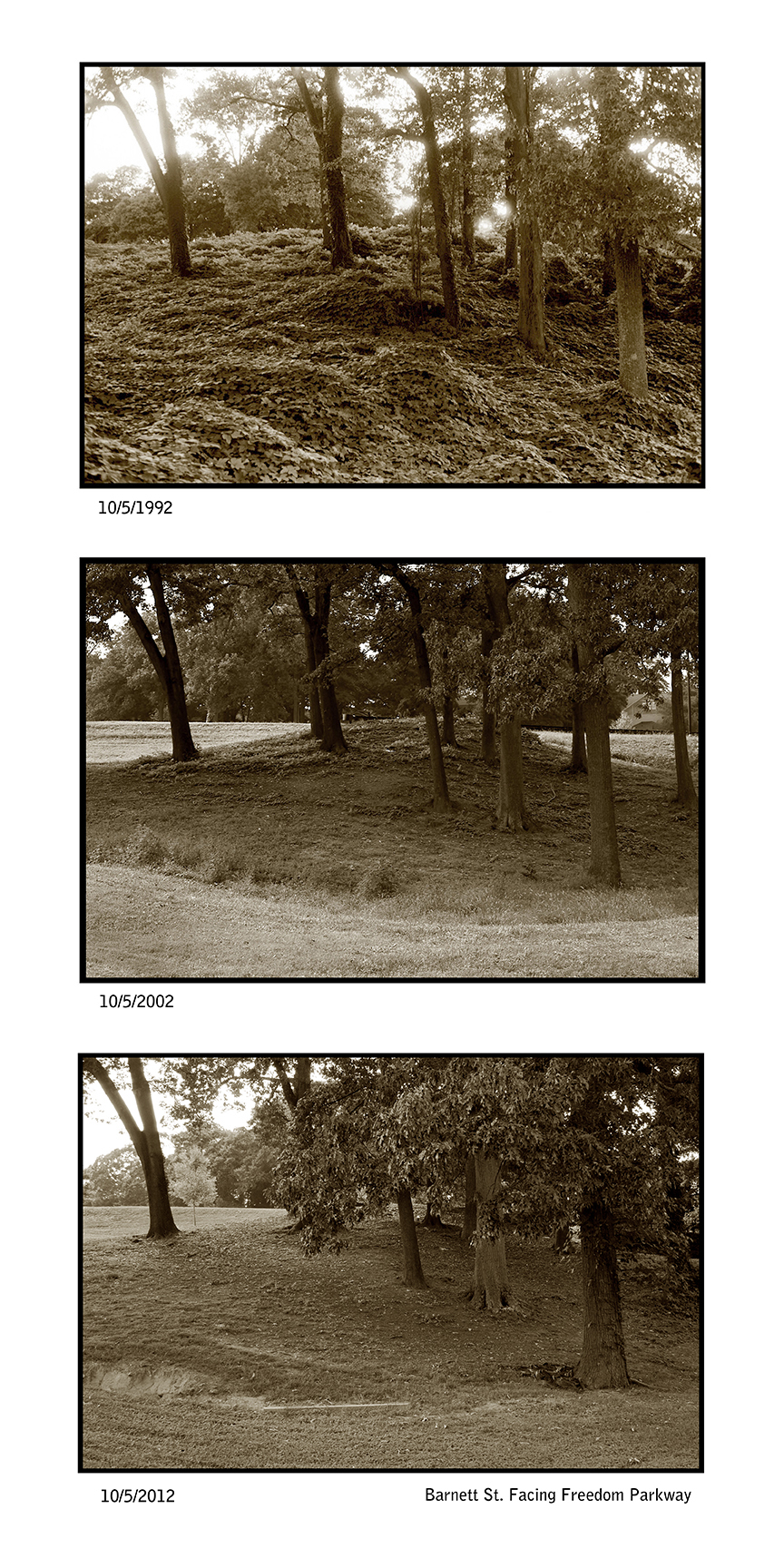
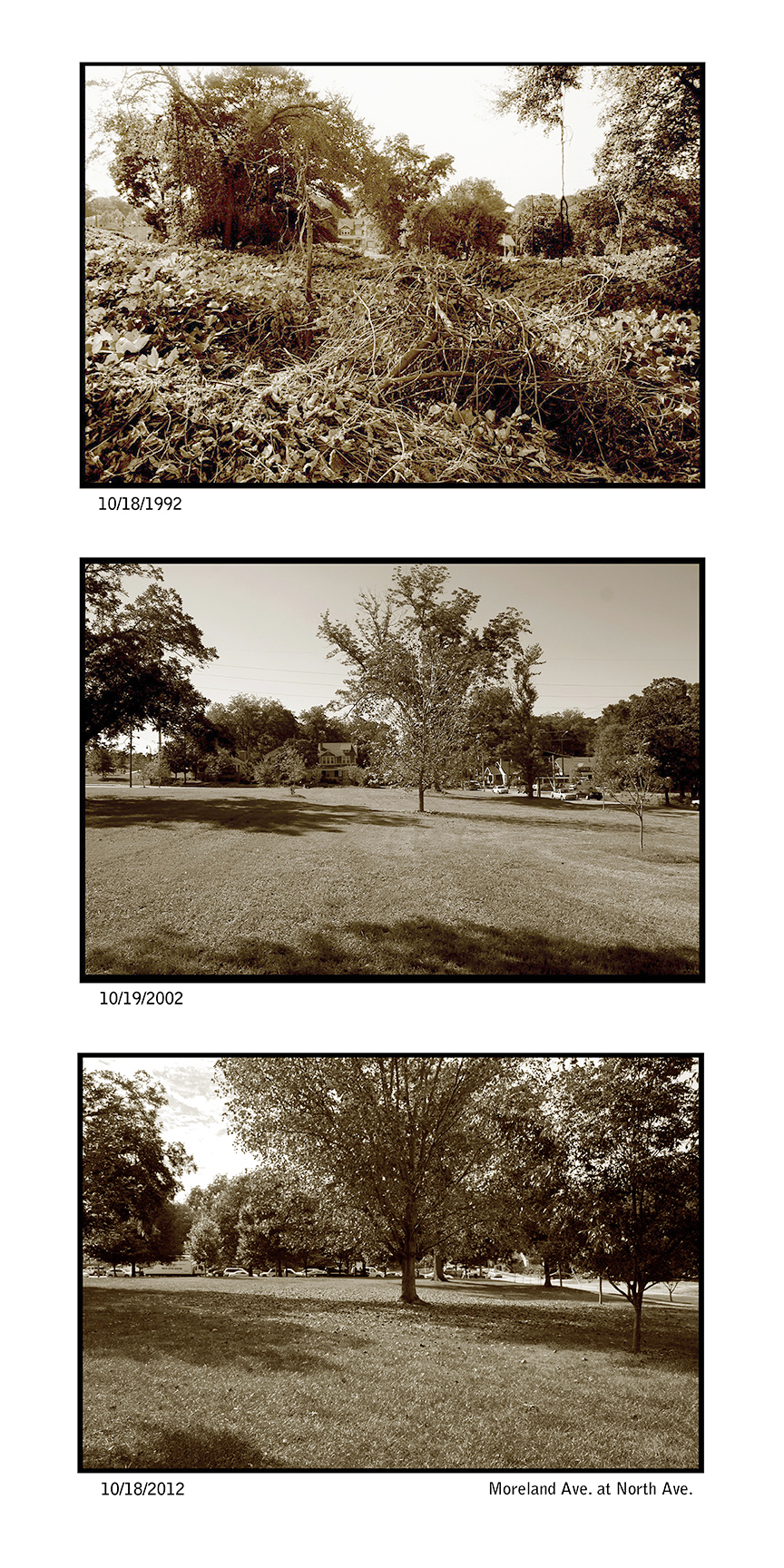
Notice how big the trees have grown!
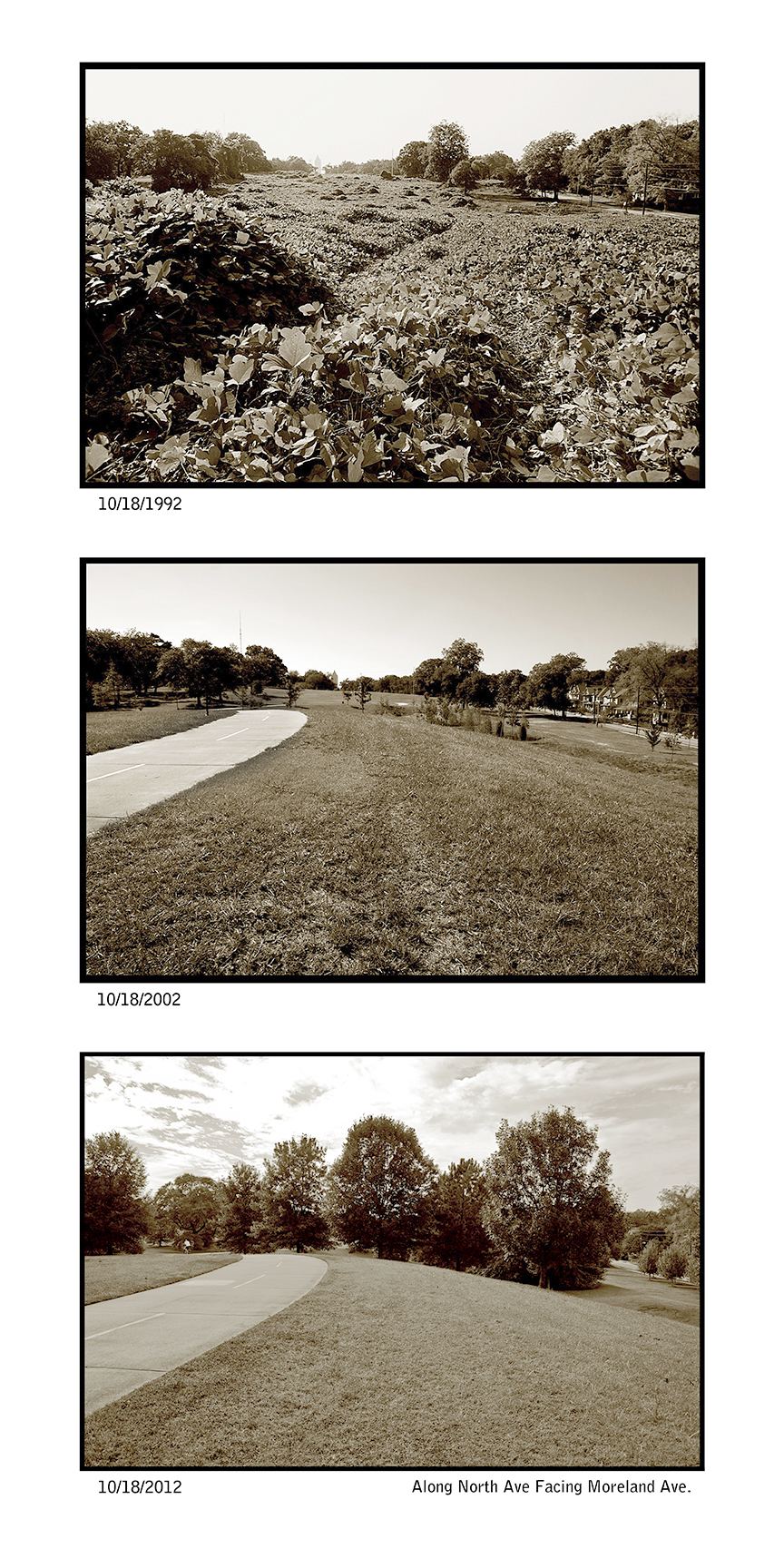
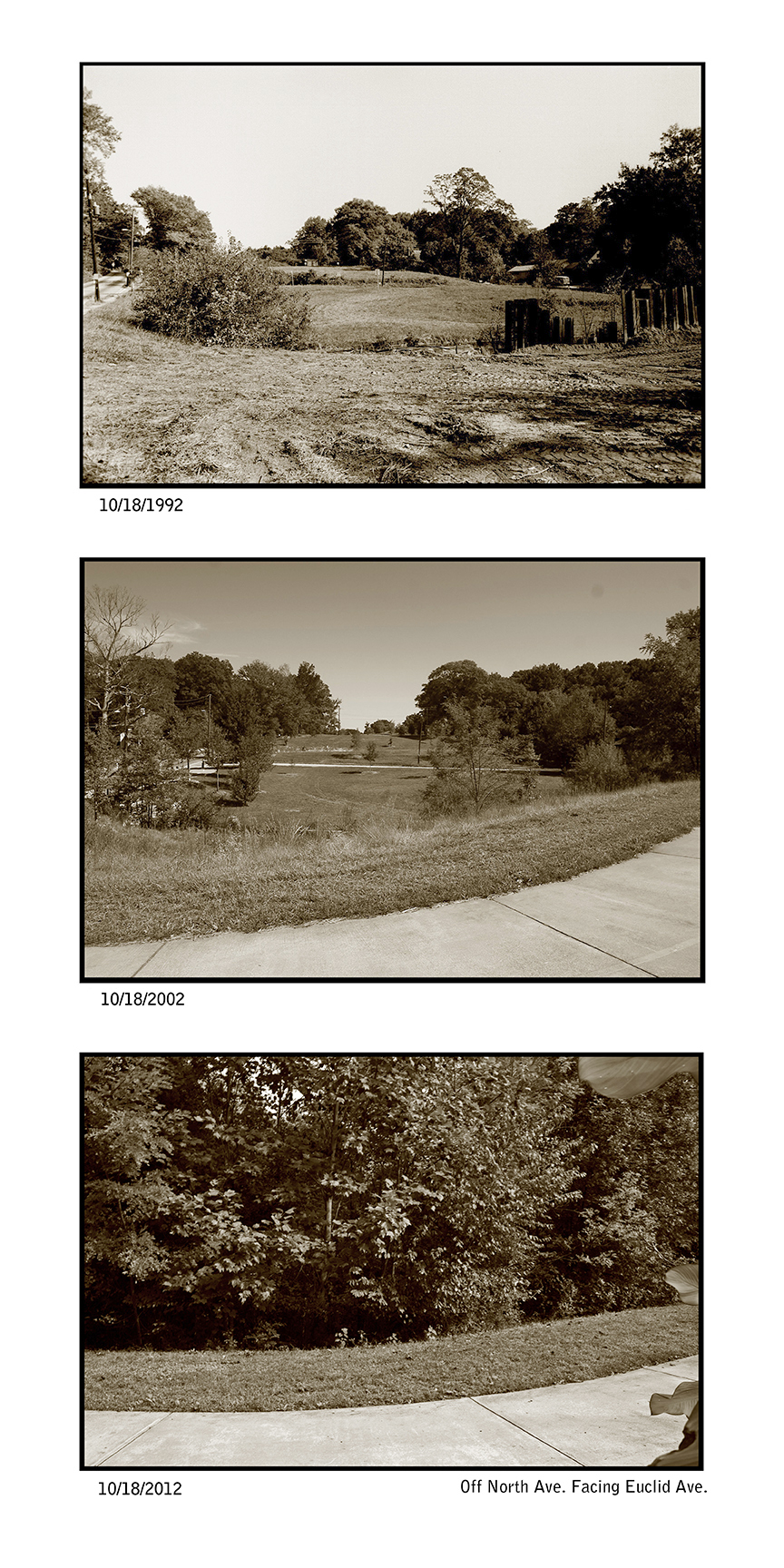
In the top photo are the remnants of the Presidential Parkway road. I wish they had been kept to remember the struggle. This is also a part of Goldsboro Park, one of three city parks which the DOT was going to build a road through a park that is not allowed by code.
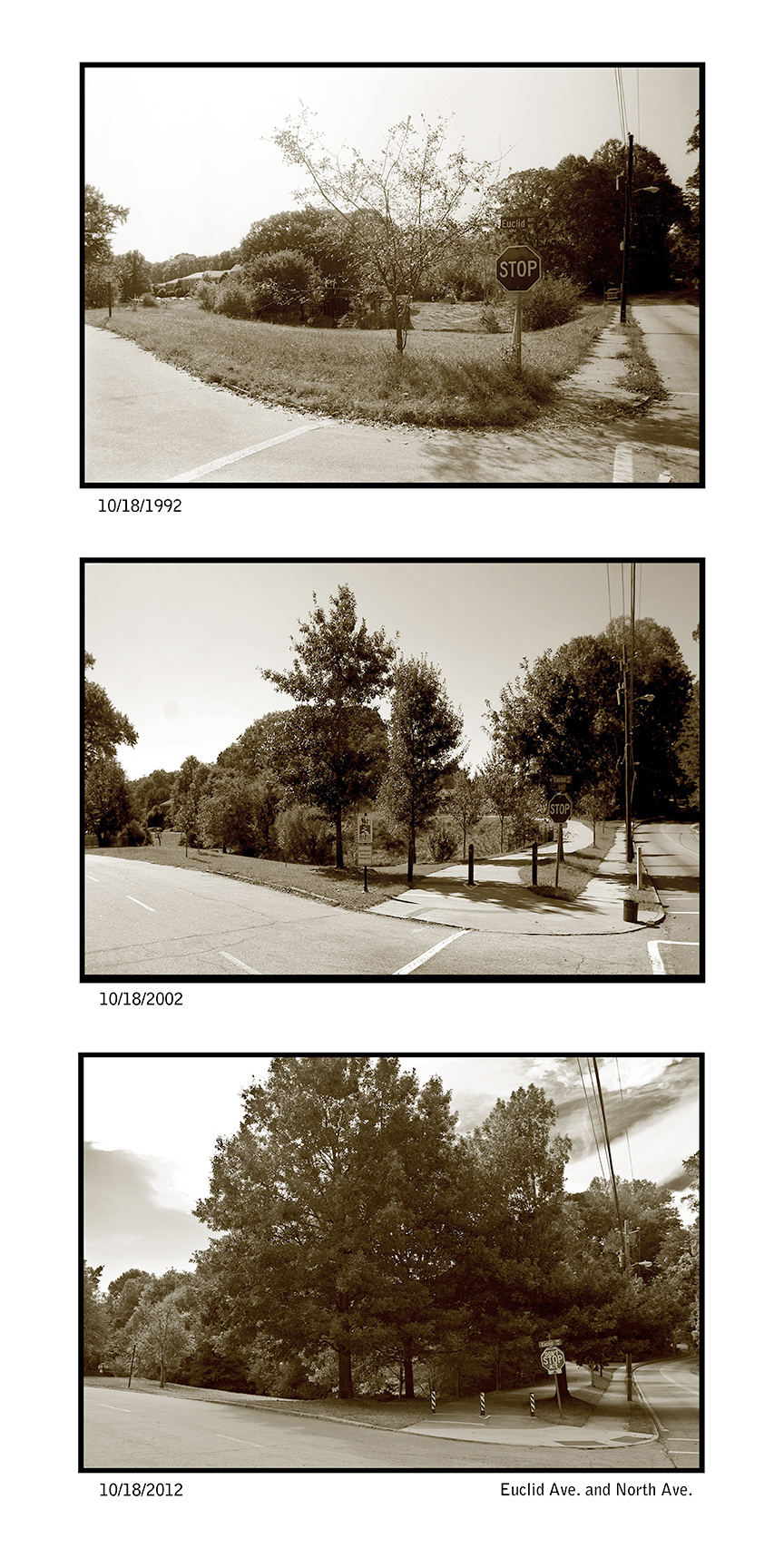
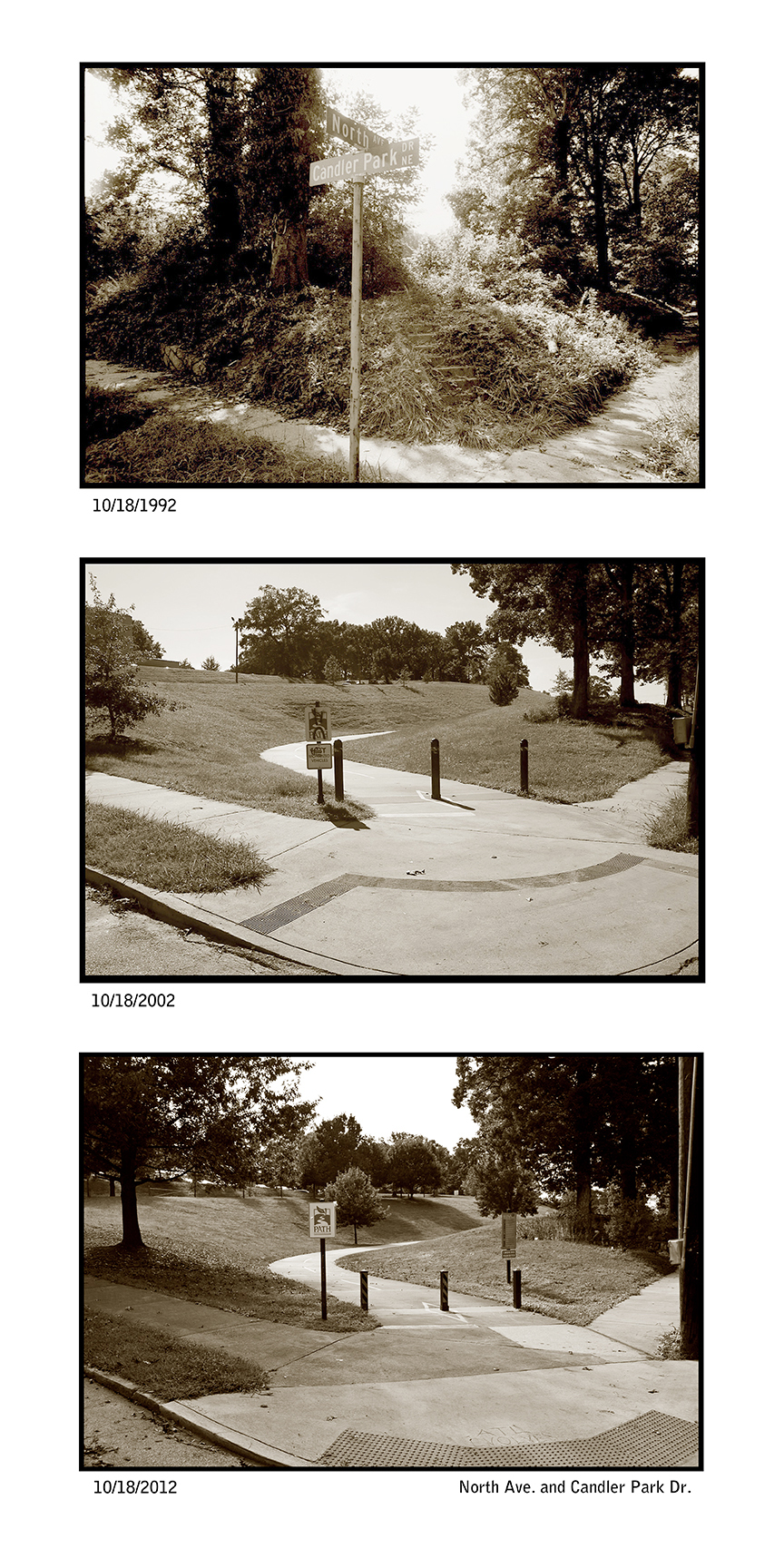
Notice the stairs again. There are still driveway cuts still on North Ave between Candler Park Dr. and Oakdale Rd.